

 Fiber artist and art quilter Larkin Van Horn of Whidbey Island, Washington, once sustained an injury so severe that she could not hold a needle for three months. No, she wasn’t diving for a Hail Mary pass or locked in mortal jump-ball combat.
She was sewing on beads.
Her repetitive muscle injury occurred years ago, when she was in the home stretch on finishing an entry for the Bernina fashion show, beading nine hours a day for the last week before the deadline. When she finished, she couldn’t even pick up a glass of water, let alone work a needle.
“I was doing all the wrong things…working in my lap, propping my elbow up, not working in an adjustable chair, but the worst thing was holding that needle for nine hours a day,?” she says. “That much tension works its way back up your whole arm and into your shoulder.”
With the help of an occupational therapist, she rehabbed her right hand largely through rest and deep muscle massage. He also taught her some simple exercises and stretches to help prevent muscle strain from future needlework. And he taught her one more important thing: to respect her body.
She’s so much a believer now in the restorative power of stretching that she routinely incorporates light stretching and wrist exercises into the workshops she teaches to guilds around the country.
Ok, so if you think Larkin’s experience seems a little extreme, just look around any quilt gathering, and you’re bound to see a few wrist splints. These are not some new form of athletically minded bling; they’re mute testimony to the fact that muscle injury is muscle injury, whether you got it playing with fabric and thread instead of some sport involving a ball.
Ergonomically speaking, quilting and sewing is rich with opportunity for pain:
- While sitting at the sewing machine, you may be leaning forward, shoulders hunched and wrists frozen in place with your hands in half-claw position, feeding fabric under the needle.
- When cutting you’re likely standing for prolonged periods at a too-high or too-low table with your wrist bent and pushing down on that possibly dull rotary cutter.
- Handwork can cause you to curl over your hoop or work, clutching it as you squint in poor light and use a death-grip hold while you push that pointy sliver of steel through gawd knows how many layers of fabric and what-not.
(Don’t know about you, sister, but our hands hurt just typing the descriptions of these dangerous scenarios.)
A little preventive action goes a long way, say Larkin and others who’ve learned the hard way. One of the tips her therapist shared with her involves as kitchen timer—no magic there—but it’s where the timer is that makes this special.
“He had me set the kitchen alarm for 45 minutes and leave it in the kitchen so you have to get up and go turn it off. While you’re standing up, you might as well do some stretches,” she says.
Here are three other stretches that Larkin routinely teaches to her workshop participants. And as you try these, remember to move slooooowly. And if there is any pain, stop ASAP and seek medical attention:
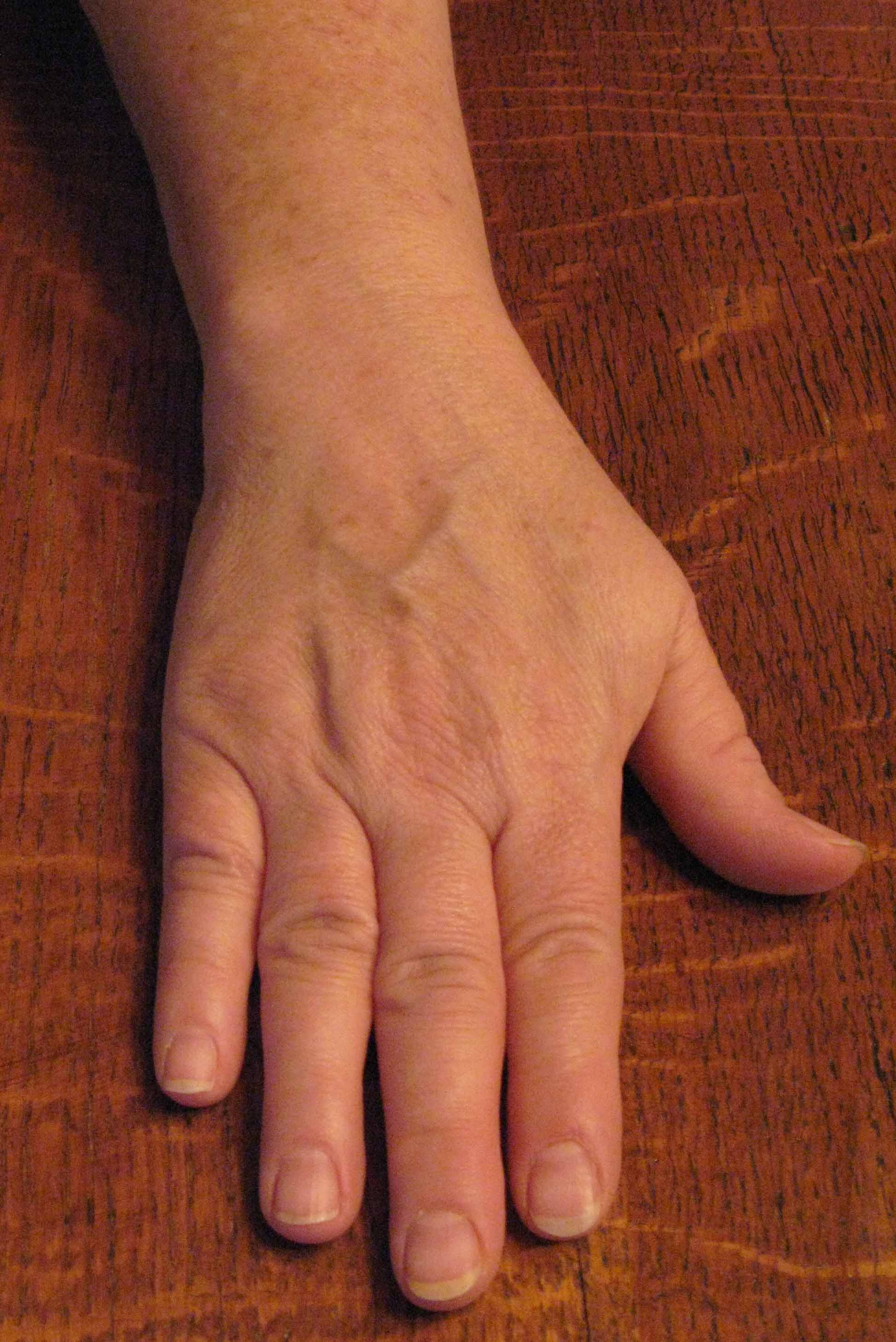 Exercise 1
Position fingers and thumb together so hand is flat and fingers are touching side-by-side. (You can do this in the air, or on a table.) Your wrist should be flat.
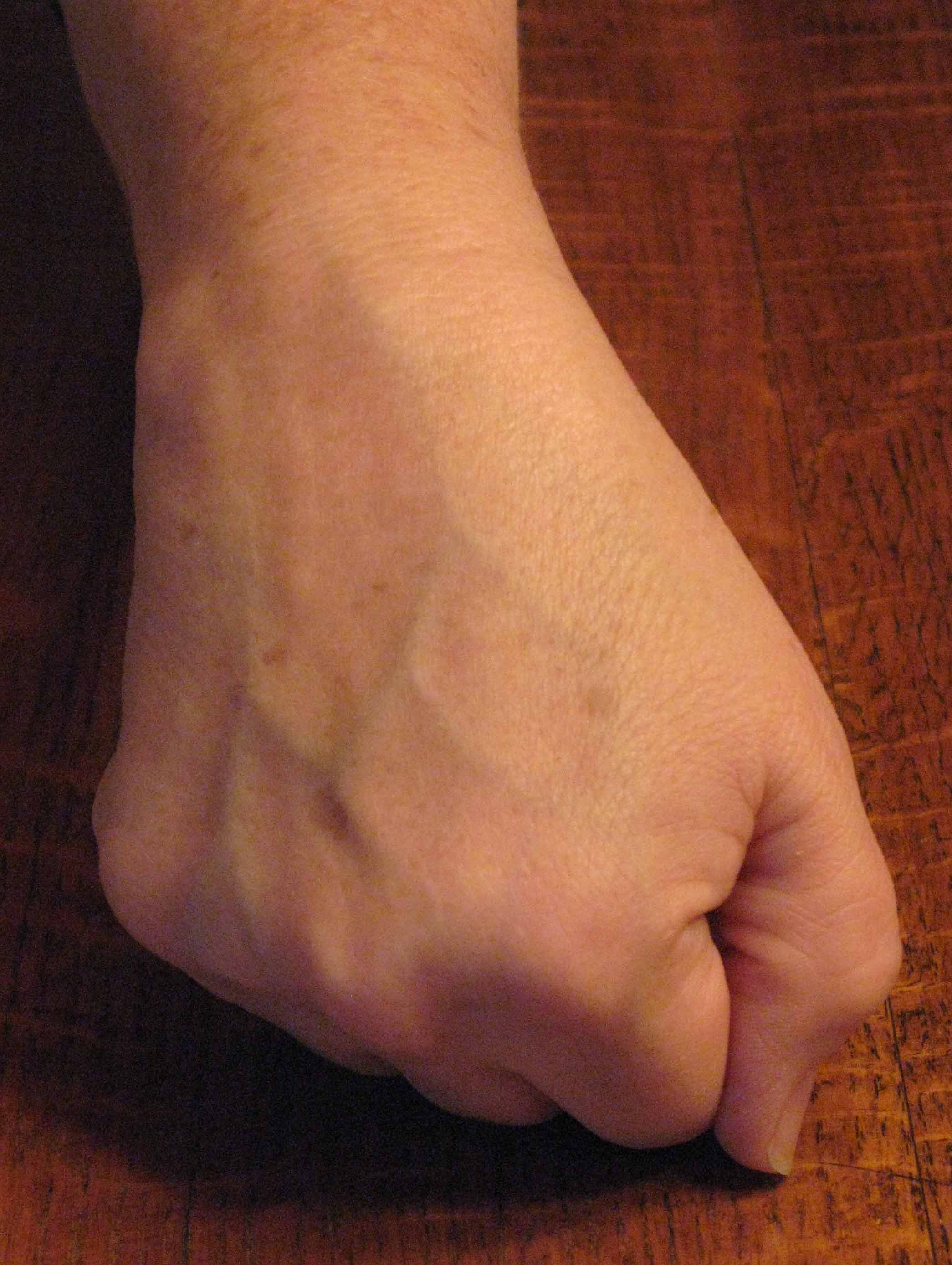
Slowly curve flingers into a fist. Then roll hand forward in the same direction as you rolled your fingers, bending your wrist forward.
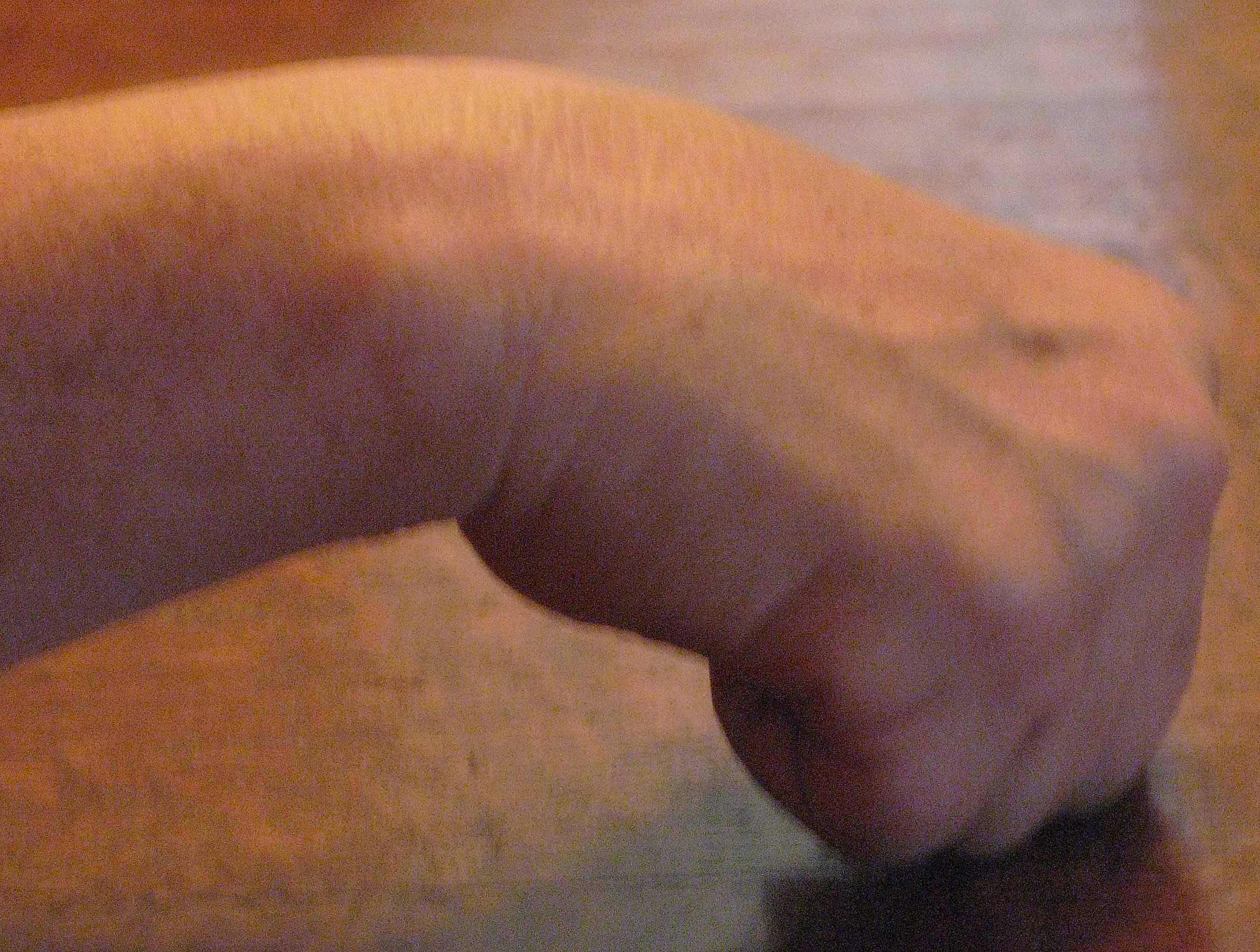 There should be light tension across back of hand.
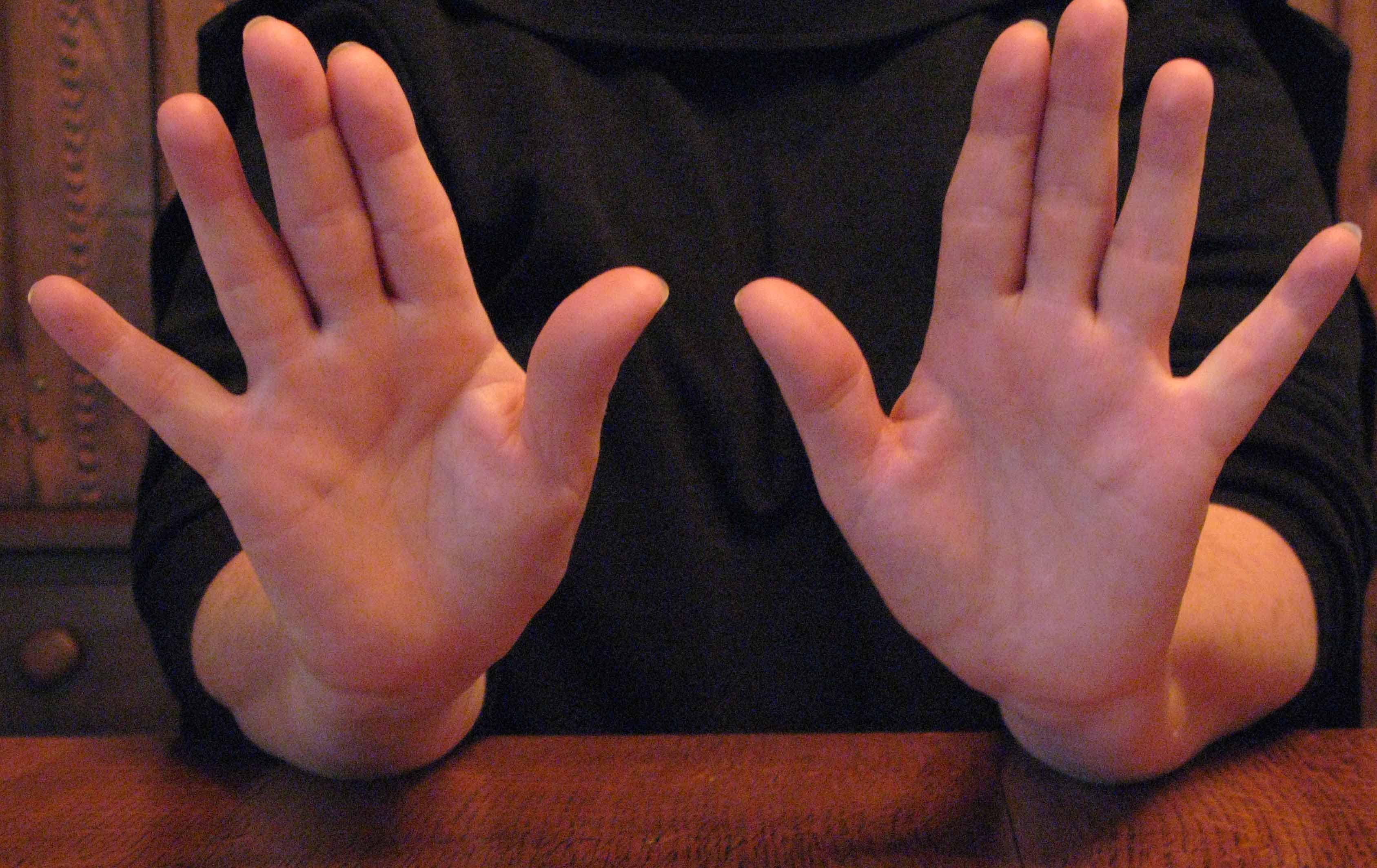 Exercise 2
Hold hands up in front of you, with the three middle fingers together and the little finger and thumb spread apart.
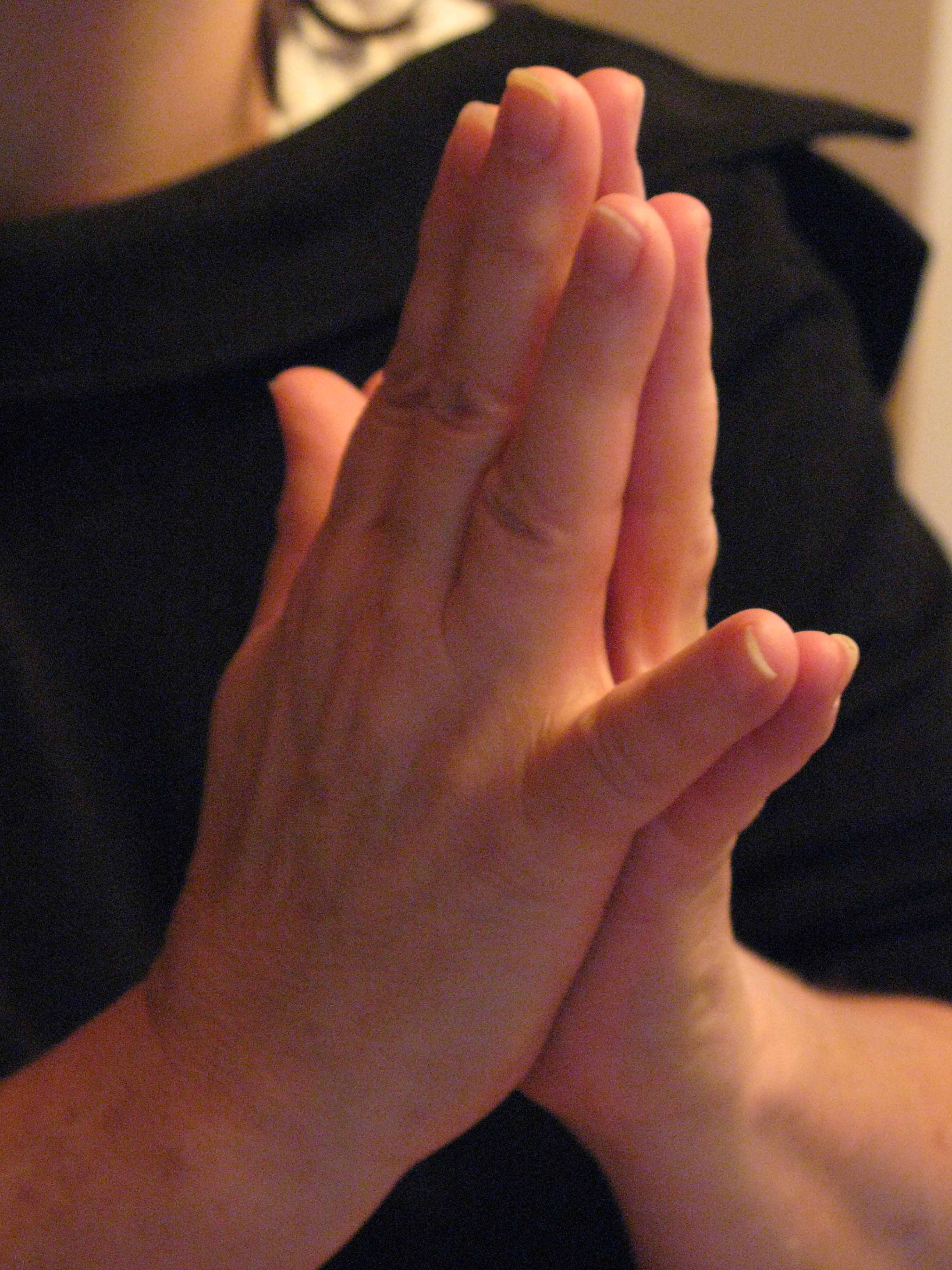 Place palms together.
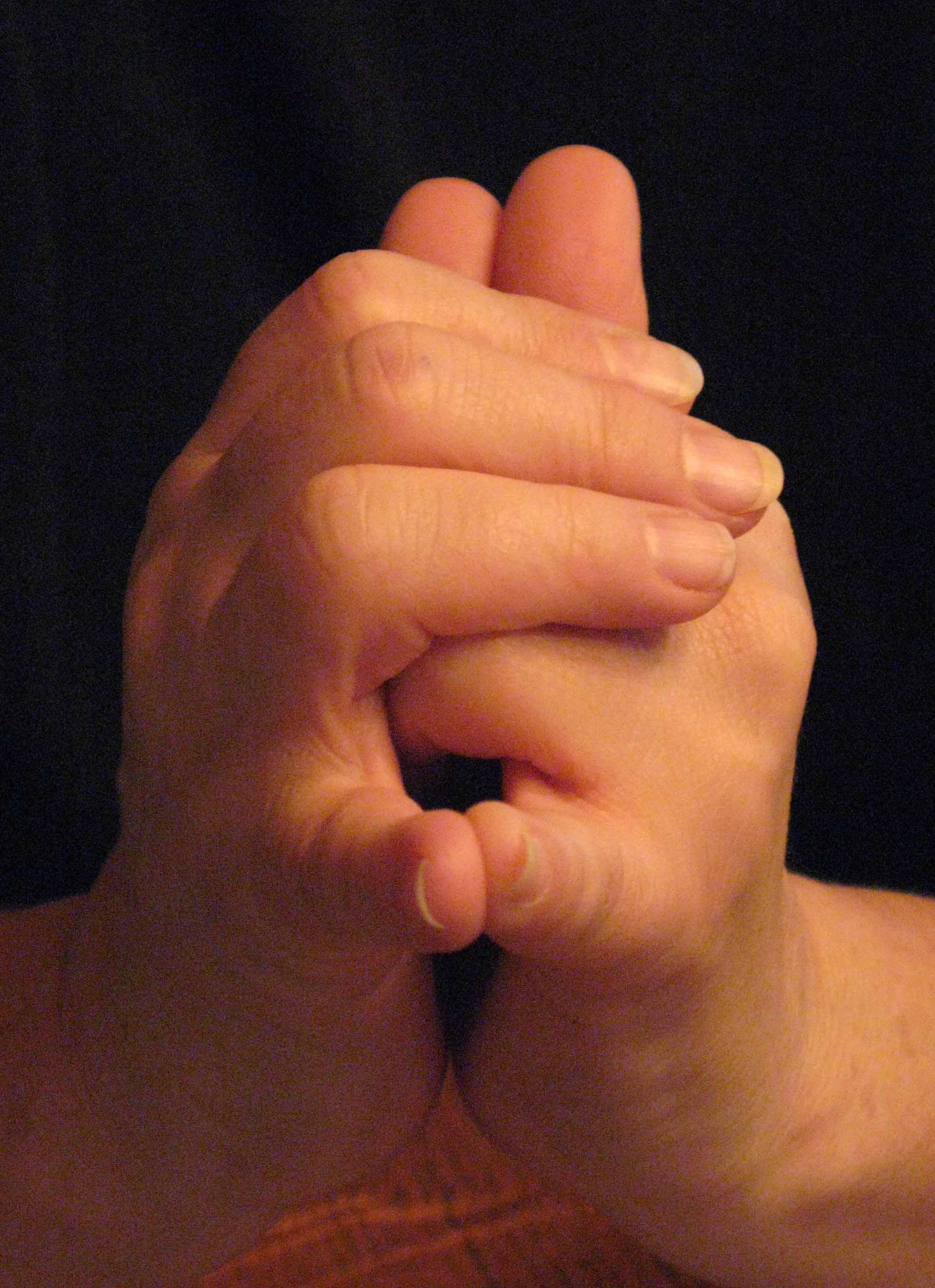
Curl fingers toward palms and stack fingers so the right fingers are is covering the left fingers. Slowly spread little finger and thumb in opposite directions. Hold for 5 counts. Shake out. Repeat, with left fingers on top of right fingers.
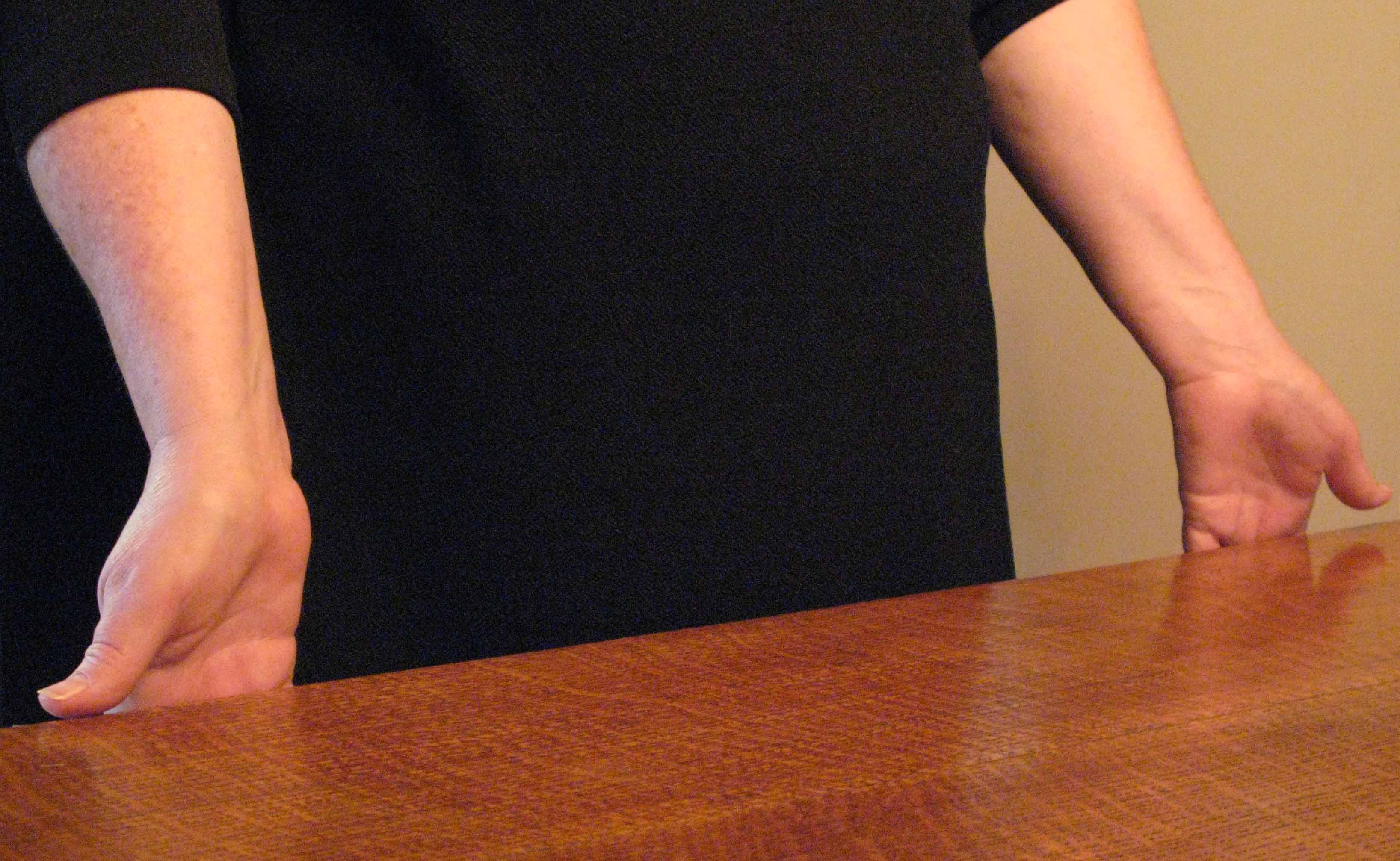 Exercise 3
Stand next to desk or table. Put fingers under edge, as if you are going to lift it.
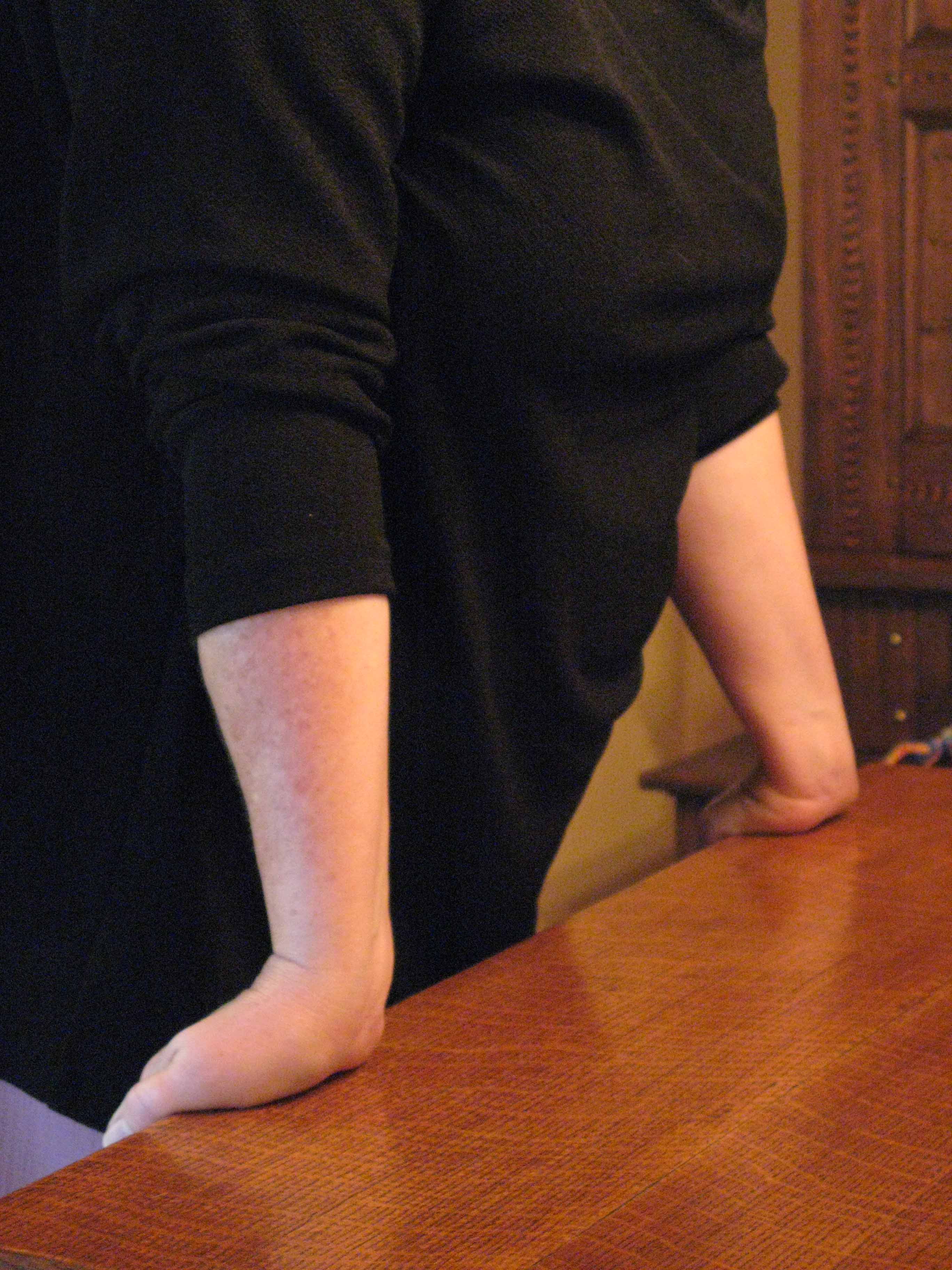 Put palms down on tabletop.
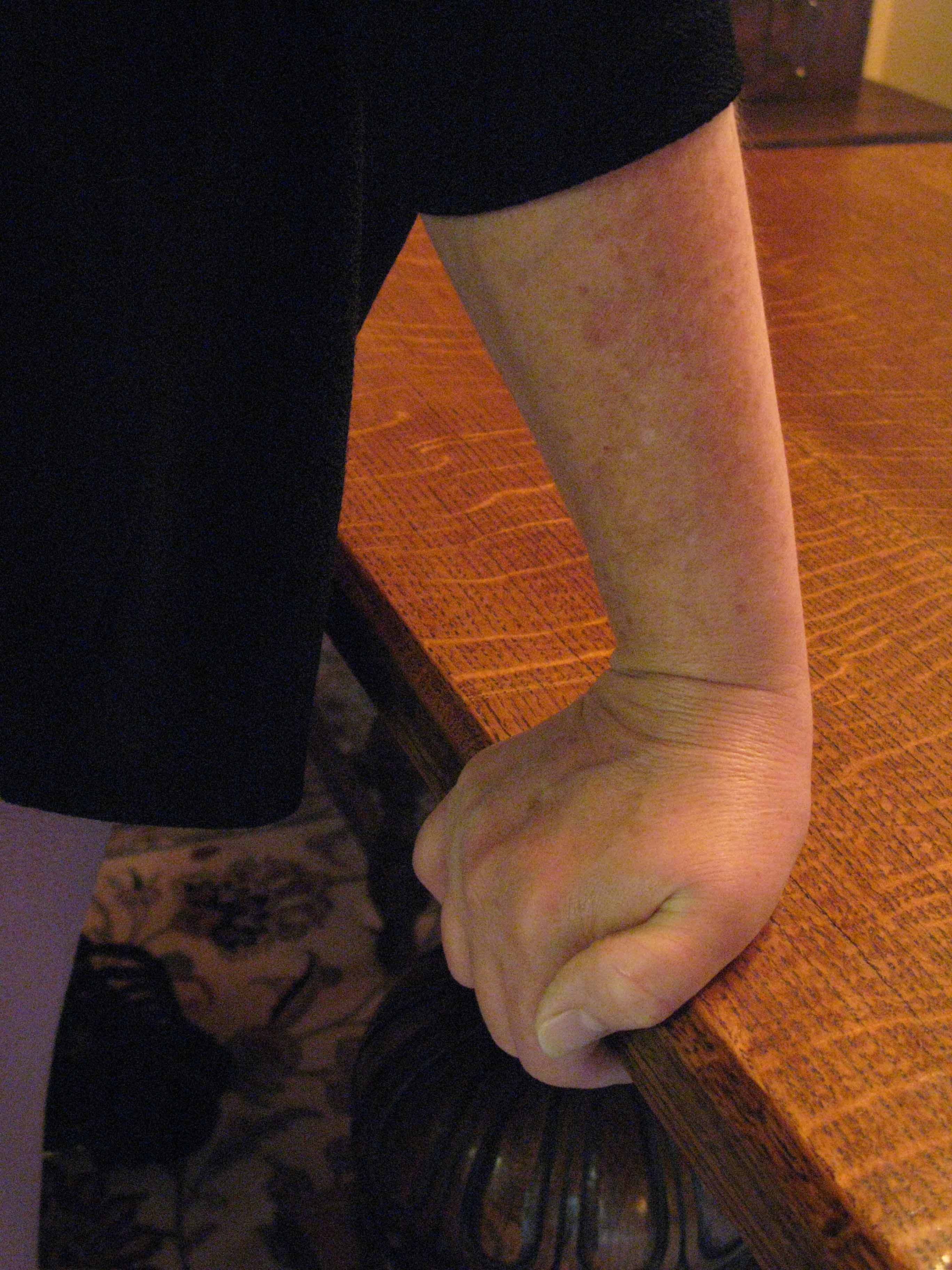 Rotate inner arm so inside elbow is facing forward and palms are flat on tabletop. Lean in slightly—and slowly. Hold for about 5 seconds. (This one doesn’t take much, Larkin says. Be gentle!)
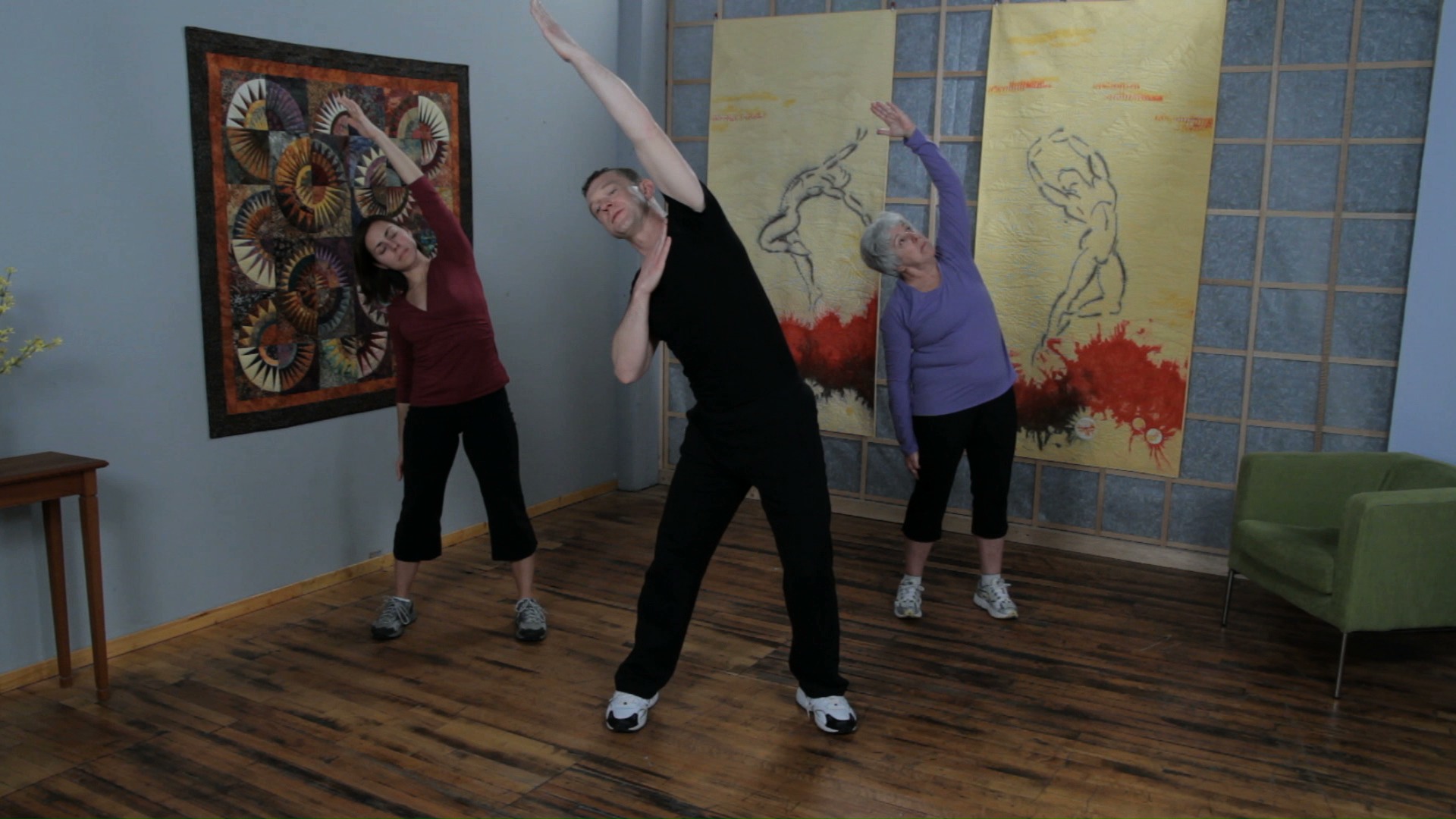 New DVD Teaches Proper Stretching Form for Quilters
If you already have body issues, then you need to pay particular attention to not aggravating those problems with unsafe quilting, says art quilter Randall Cook of Rochester, New York. He, too, learned the hard way about muscle injuries. Years ago, he was addicted to the adrenaline rush of pumping heavy iron and pumped unwisely, sustaining dual shoulder injuries that required four surgeries to repair.
Randall’s still really active—and even teaches yoga, Pilates and body conditioning—but if he doesn’t have good posture or good form when he is at the machine, it really starts to affect his shoulders, he says.
When you’re quilting, all the muscles on the back side of the body are not usually where they’re supposed to be. The muscles that stabilize the scapula and support the upper back are elongated longer than they should be, he says. Stretches allow these to return to their original lengths.
You might say it’s become a personal mission with Randall to help quilters learn about and prevent muscle injuries. He taught stretching and exercise classes to quilters at International Quilt Festival in Houston a few years back, and will again be teaching this topic during Festival.
But you don’t have to visit Houston to learn Randall’s tricks for limbering up so you can painlessly lay down stitches. He and Picturesmith Productions, the creators of Stitched, the much-talked-about documentary on quilting, will release Stretching for Quilters
The 40-minute DVD will be released at the International Quilt Festival in Houston in November. This program will help quilters and others work out some of the tension caused by sitting for hours.
Cook will be leading an exercise program on Saturday, Nov. 5. And Stitched will be screened twice during the festival. Picturesmith will also operate Booth 413 during the festival and will be selling its line of DVDs and T-shirts.
And how about a q-fitness tip for GenQ-ers?
“Every 30 minutes, you should stand up out of your chair and do (some stretches). And then every hour, stand up and walk away from the machine and do something else,” he says. Just completely leave your workspace.
In the DVD, Randall shows how to safely and completely stretch out the muscle groups most affected by the various postures in sewing and quilting. Click here to see a trailer.
The DVD retails for $14.99, and can be purchased at http://www.stitchedfilm.com/home.html. (And yes, one of the models who appears with Randall in the DVD is actually a quilter.)
(Our thanks to photographer Patricia House of Albuquerque, New Mexico, who took the exercise images.)


{ 4 comments… read them below or add one }
All very good points. And using computers badly will affect your sewing and vice versa (although I may be the only person ever who has dislocated a knee using a computer unwisely…) Using laptops while scrunched down on the sofa? Recipe for disaster. Hunched over too small a space, with no real room to manoeuvre? RSI waiting to happen. I’m from the generation that has grown up with computers, and 20+ years down the line from first using them I have RSI in my shoulders, forearms, wrists and hands. It comes and goes, but it affects my sewing as well, and sewing can now trigger it too. Don’t try and ‘push through it’, it will REALLY screw things up down the line (
(
Oh – all of this is GREAT information! I’m already having bi-weekly massages due to my quilting, but my massage therapist never told me about ways to prevent it!
Thanks for all of this!
I think those hand exercises will work out computer/mouse hand issues too. I do have a few stretching exercises I do already. One is “yes, no, maybe so” – sit straight, feet flat on the floor. Then slowly nod your head up & down (yes) 3 times, followed by side to side (no) 3 times, then finally, pull your shoulders up to your ears (maybe so) & relax down 3 times. It’s amazing how well this relaxes your neck & shoulders.
If you’re feeling silly, you can also do the Gorilla – arms up in the air & ‘wag’ them back & forth a bit, while saying ooh-ooh-ooh-ooh…!
Great tips and thanks for the step by step photos.
{ 1 trackback }